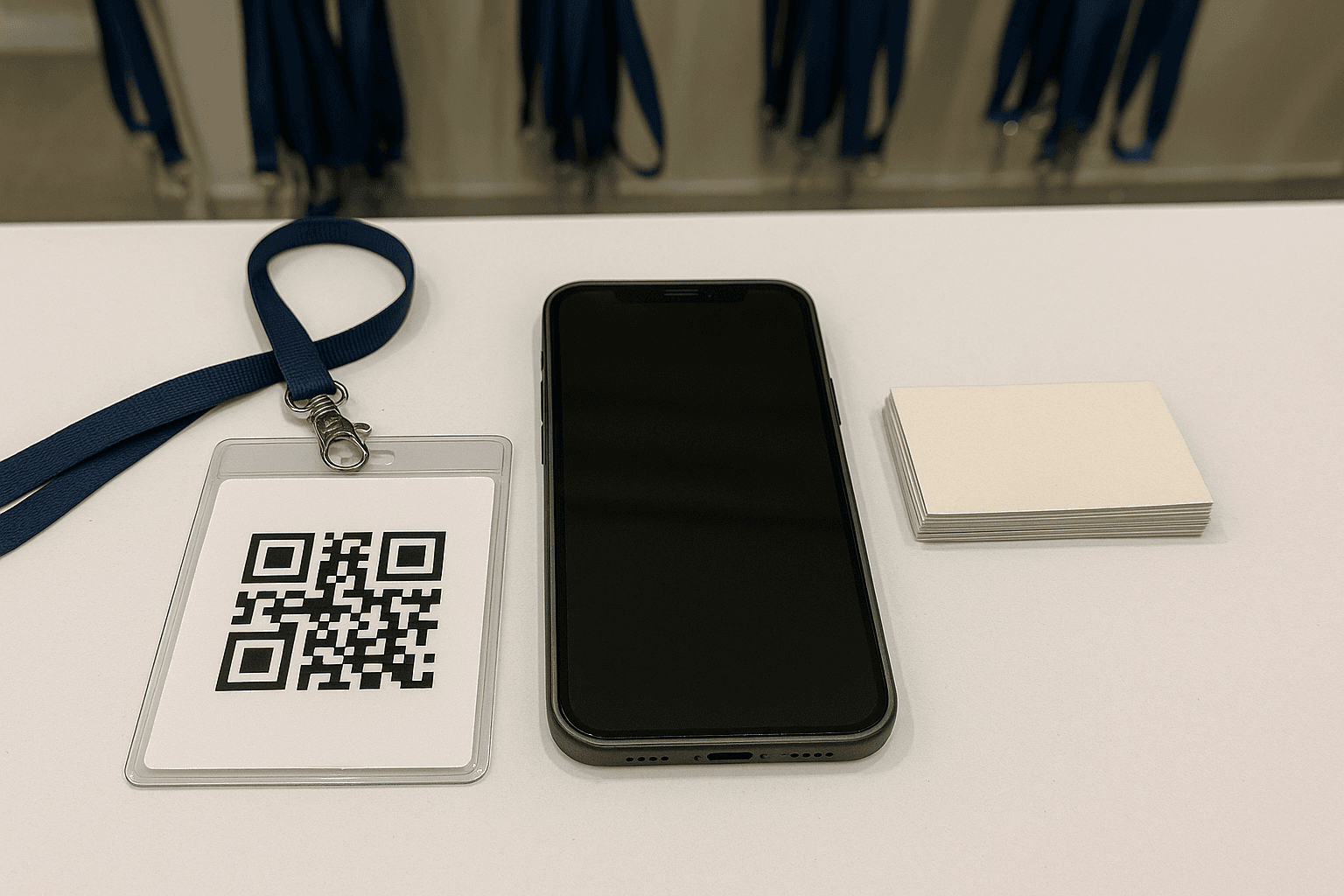
The Two Camps
Walk any expo floor and you will see two types of exhibitors: those collecting business cards in a fishbowl, and those scanning badges with an app or rented device.
Both approaches "capture" leads. But the downstream impact on pipeline is dramatically different.
Business Cards: The Hidden Costs
Business cards feel simple. Someone hands you a card, you drop it in a stack. But the real work starts after the show:
- Manual data entry: Someone has to type every card into your CRM. For 200 leads, that is 4-6 hours of work.
- Error rates: Misspelled names, wrong email domains, and missing phone numbers are common when entering data manually.
- No conversation context: A business card tells you nothing about what you discussed or what the prospect cares about.
- Delay: Most teams do not start data entry until they are back in the office, 2-3 days after the show.
Badge Scanning: The Advantages
Digital badge scanning addresses every issue above:
- Instant capture: Contact data is captured in 2 seconds with zero manual entry.
- Accuracy: The data comes directly from the registration system — no typos.
- Context layer: Modern scanning apps let you add voice notes, tags, and ratings right at the booth.
- Speed to CRM: Leads can sync to your CRM the same day, enabling immediate follow-up.
The Numbers
Teams using badge scanning with same-day follow-up consistently report:
- 3-5x higher response rates on initial outreach
- 60% less time spent on post-show data processing
- Measurable per-show ROI because every lead is tracked from scan to close
When Business Cards Still Make Sense
Not every event provides scannable badges. Smaller meetups, networking dinners, and conference hallway conversations often involve business cards. The key is having a system to digitize them quickly — snap a photo, let AI extract the data, and get it into your pipeline the same day.
The Takeaway
The capture method matters less than what happens in the next 24 hours. The best exhibitors use whatever tool gets clean data into their CRM fastest — and follow up before the prospect forgets their conversation.